Frankenstein meets Adam
Including special journal prompts for 2024
A story that starts with a celebration of life, the Genesis creation story in the Biblical account of Genesis takes a murky turn as a talking serpent and a juicy piece of fruit leads the two representatives of humankind (Adam and Eve) to desire the undesirable for the first time. The tale depicts a moment in which Adam and Eve have an irresistible temptation , a moment that many have wished could have been erased from the narrative, as in that moment, the beauty of God’s creation became tainted. At the end of the story we are left with a sorry tale that we may prefer to skip from the Children’s Bible, but arguably without the literary narrative of the fall in Genesis 3 people today would have less of an accurate understanding of what it means for a person to develop an awareness of the dark side of the world.
In the Genesis story, God’s creations suddenly awaken and have metaphorical dark and light inside of them, or an awareness of both evil and good, all after the bite of the fruit (pomegranate or apple – you choose). One could say, it was never going to end well, the people were made from dust after all and were destined to fail eventually. Perhaps Viktor Frankenstein would have better luck when he set to work on a creation in his lab. I’ve recently appeared in an adaptation of Frankenstien in a the local amateur theatre company – I played both Justine and William which I found to be a great chance to reflect on the place and necessity of innocence and sacrifice in stories where characters, like Adam and Eve, or Viktor Frankenstien wrestle with the knowledge of their ‘dark side’. I’ve summarise thoughts which arose from the way we dramatised a specific adaptation of Mary Shelley’s Frankenstien, so please note this reflection is not based on not a direct link Mary Shelley’s writing, but I wonder what you could gather from reading Frankenstien and Genesis 3 if you put them side by side.
Frankenstien’s creative process verses God’s creative process
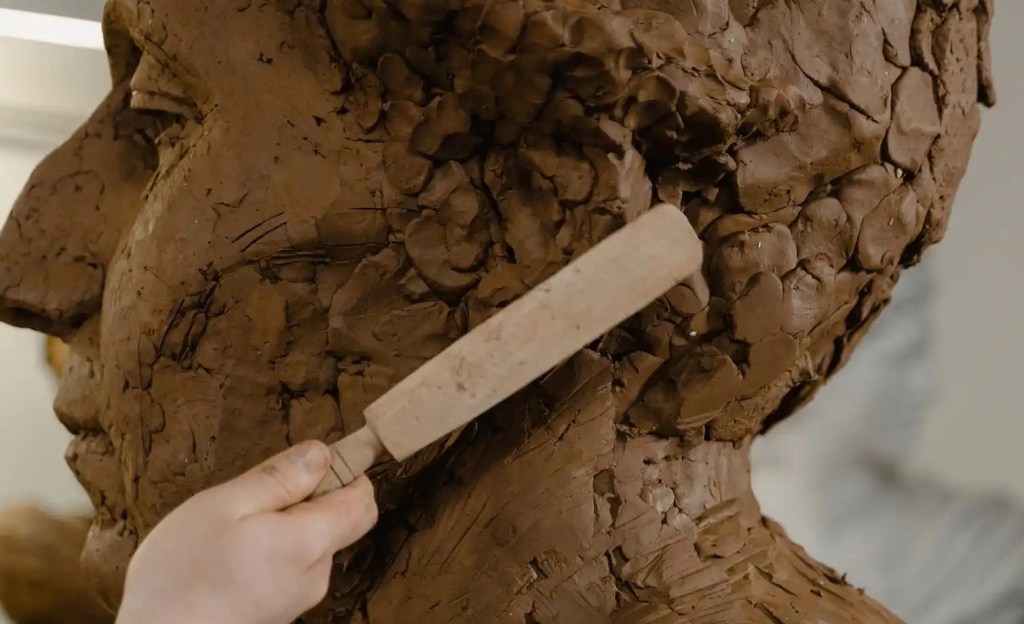
In the plat, Frankenstien began developing his creature as a science experiment after years of study in university. His fellow peers think of him as more than strange as he spends more and more time in his workshop. His levels of frustration grow higher as he reaches the final hurdle of bringing life to his creature. Giving life to the creature is so challenging that it is almost painful for him, but with lack of sleep and hours of hard work he finally produces a creature grasping for breath. In the Genesis account of Adam’s creation, God is the source of life and the sharing of his ‘ruach (רוּחַ’ (wind, breath, mind, spirit) is seamless and easy. His creation Adam awakens instantly as God breathes life into him. Adam is formed from dust, and God need not gather masses of apparatus or elements to create the man, but effortlessly makes a creature that is alive and magnificent from almost nothing. God is not suffering half empty after giving away the breath of life to his creation, he remains complete and full, and thus continues on to create Eve in Genesis 2.
The Creature’s first interaction with others
The first person the creature sees runs away in terror because the monster is so hideous, after all he is partly made from materials found from dissecting rooms and slaughter houses. As the creature explores and begins to meet real humans gradually, the whole village community turn to hunt and hate the creature, particularly when they suspect him of trying to hurt a girl. Little did they know, his intention was actually to save her. From there, the presence of evil within the creature erupts into his actions. Evil overpowers his decision making and he is led by it. It seems that the creature’s vengeance towards humanity and desire to destroy comes from the lack of acceptance from those he first met after he was created. The question prompted by this is; is there a part of human nature that fears the reaction of others, and where does this fear lead us?
Consider the first meeting you have with a new colleague, or family relation. Even the extroverts among us are likely to chose to hold back slightly and not to reveal everything about their true self. Personality quirks and controversial preferences can and should be saved for friendships and relationships built on firmer foundations of trust. Lack of acceptance and shock horror from strangers in a community would be an impossible pill to constantly swallow over the long term, so who can blame the creature for recoiling and harbouring bitterness and pain? Whatever our true nature may be, where does the reaction of others in our community leave us and do we conform too easily to settle into the norm and appease others? Perhaps the creature would have turned out a kinder being if he had been included and accepted into the society without having to look ‘right’. The question grates roughly against the premise that the presence of good and evil existed long before the first creation, and suggests that we are in fact the result of our environments. Bringing the two stories together, I’d settle that we are a mix of both creature and spiritual creation; precious animals formed by both nature and nurture.
A love shared is a problem halved – the loving connection that attracts us to change
The Creature’s creator has embrace isolation and loneliness in the long creation process. He had disconnected himself from those he used to spend time with , and I can imagine he was in a dark wallowing space after months of gruelling gory work. Out of this isolation came a creature who knew only his creator, and at that, a creator who would not fill him with the spark of communion with others, as the creator himself was not fuelled with the energy of a social life. I’d suggest that Frankenstien being merely a man, could not birth what he did not himself have. What would Frankenstien have created had he worked as a team with other creators?
This depiction of a human fallible creator, highlights to me the brilliance and importance that the God creator in Genesis 3 is later in the Biblical text understood to be a social being in himself – three persons in one, outshining any human creator. The creature’s heart is softened as he is exposed to the love shared among the De-lacy family, that is what he is drawn to – he wants to be like them, because of the attraction of the love shared between them. He feels a desire to change, to respond by discovering who he is and the question where he fits among the people around him. If only he had been welcomed rather than disregarded and threatened as a monster. What is it about shared loving connection that attracts us to change? As the creature and the bride share an eerie, loving embrace as they dance a gentle waltz, the picture of connection being transforming and emotive power is solidified.
I hope you’ve enjoyed mulling over acceptance, beauty, innocence and creativity as we’ve looked at Frankenstien and the creature, and Adam and God. We’re turning over a new leaf as we enter 2024. Here’s some journal prompts to start your thoughtful journey into the new year!
- Who can you connect with this year, to ensure your creations are breathed with the life and energy of others?
- Who did you meet last year that you want to grow with this year?
- How can you embrace change through knowing and accepting others?
- What can you create that will bring beauty to a dark winter?
- Which parts of the creation story inspire you to create?
Did you enjoy reading? Buy me a coffee to keep me writing, by clicking through to https://www.buymeacoffee.com/thewritespace
 The Write Space